

Sustainability · 2025
In this section50 topics
- Sustainability Policy2 items
- Sustainability Goals & UN SDGs3 items
- Policy Review3 items
- Impacts on Stakeholders — Overview1 item
- Business Value Chain1 item
- Stakeholder Analysis1 item
- Environmental Policy & Guidelines5 items
- Environmental Policy Review1 item
- Energy — Plan & Guidelines2 items
- Energy — Electricity Consumption1 item
- Energy — Fuel Consumption1 item
- Energy — Targets2 items
- Energy — Performance & Outcomes2 items
- Water — Plan & Guidelines2 items
- Water — Withdrawal, Discharge & Consumption1 item
- Water — Targets2 items
- Water — Performance & Outcomes2 items
- Waste — Plan & Guidelines2 items
- Waste — Generation, Disposal & Recycling1 item
- Waste — Targets2 items
- Waste — Performance & Outcomes2 items
- GHG — Plan & Guidelines2 items
- GHG — Emissions1 item
- GHG — Emissions Verification1 item
- GHG — Targets1 item
- GHG — Performance & Outcomes2 items
- Environmental Legal Incidents1 item
- Other Environmental Management1 item
- Social Policy & Guidelines5 items
- Social Policy Review3 items
- Social — Principles & Standards Practised1 item
- Human Rights Due Diligence4 items
- Employees — Plan & Guidelines3 items
- Employees — Workforce1 item
- Employees — Remuneration & Provident Fund1 item
- Employees — Training & Development1 item
- Employees — Occupational Health & Safety1 item
- Employees — Labour Relations1 item
- Employees — Employee Representation2 items
- Employees — Targets2 items
- Employees — Performance & Outcomes2 items
- Customers — Plan & Guidelines3 items
- Customers — Satisfaction Results1 item
- Customers — Targets2 items
- Customers — Performance & Outcomes2 items
- Community & Social — Plan & Guidelines3 items
- Community & Social — Targets1 item
- Community & Social — Performance & Outcomes2 items
- Other Social Management1 item
- Law Violation Incidents1 item
Sustainability Policy
Has a Sustainability Policy
Yes
Policy Description
The Company is committed to conducting its business alongside effective sustainability management to ensure that it can deliver valuable experiences through its products and services. To support this commitment, the Company has established a Sustainability Management Policy to serve as a guiding framework for its operations and to facilitate the transition toward becoming a comprehensive Omni-media organization, while promoting stable and sustainable growth. The Company operates its business in accordance with the principles of good corporate governance, social responsibility, and environmental stewardship throughout its value chain. In addition, sustainability principles have been integrated into the Company’s strategies and business plans by aligning economic, social, and environmental dimensions with the United Nations Sustainable Development Goals (SDGs), with the aim of creating balanced shared value for all stakeholder groups
Corporate Sustainability Framework and Strategy
The Company has established its sustainability goals and strategies in alignment with its business direction and sustainable development objectives. These goals and strategies are developed with consideration of the business context, stakeholder expectations, key global trends, and relevant United Nations Sustainable Development Goals (SDGs).
To ensure that sustainability initiatives are implemented in a systematic and practical manner, the Company has adopted an Environmental, Social, and Governance (ESG) framework to guide sustainability management and monitor performance as follows
Nurturing the environment through green procurement, resource efficiency, and environmental conservation
Fostering good society through products and services Delivering value to all parties involved right from those engaged in production process to end consumers
Upholding good economy / good corporate governance through fair operations, transparency, and business ethics
1. Sustainability Management Policy Good Corporate Governance
The Group operates its business in accordance with the principles of good corporate governance, transparency, and good governance. According to the organization's guidelines in the corporate governance manual, corporate governance and business code of conduct as well as comply with laws, rules, regulations, methods and standards set by regulators and international standards, protection of personal information, and comprehensive risk management across the organization's value chain in order to business continuity by creating shared values and taking care of the interests of stakeholders all groups in a balanced and equal manner.
Social Shared Value Creation
Human Resource Management is efficient and fair, developing the knowledge and skills needed as necessary according to the plan develop employees, promote creativity in work, support the occupational health management system and good security, encourage executives and employees to respect and comply with international human rights principles by the principle of equality and non-discrimination covers the elderly, the disabled and other underprivileged groups by providing fair compensation and including not using children under 18 years of age in accordance with the labor law, support savings channels and create security for employees. As well as encourage participation of the company with communities and relevant stakeholders to create satisfaction for employees, stakeholders and communities living around the Company's business areas by fostering relationships create understanding and strong cooperation to reduce conflicts that may occur in the future.
Sustainable environmental management
The Group realizes and gives importance to business operations that do not affect the environment, conservation energy and water resource management, promoting resource utilization with value to reduce waste emissions waste and greenhouse gases, promote cooperation and participation in the conservation of natural resources and take care of the environment between the organization and external agencies and give importance to strictly compliance with the law on the environment. Including the promotion of environmentally friendly procurement according to the Green Procurement Principle.
2. Sustainability management guidelines
Company Sustainability Management Structure Details are as follows:
Board of Directors: Duties as follow as.
o Approve the sustainability management policy and consider and properly review in accordance with the situation
o Encourage the implementation of conducting business and activities within the group of companies to achieve the goals sustainability and in line with sustainable development according to international principles
Sustainability and Risk Management Committee: Duties as follow as.
o Formulate sustainability policies and plans that match AMARIN Group’s business operations and covers Social, Environmental and Governance aspects and submit them for the Board of Directors to consider and approve.
o Monitor and push for the implementation of sustainability plans, provide support and report AMARIN Group’s sustainability progress to the Board of Directors and relevant subcommittees.
o Review and recommend sustainability guidelines for the Company to comply with best practices and updated international standards by presenting the recommendations to the Board of Directors for consideration and approval.
o Consider and approve the Company’s material sustainability issues in each year to reflect the needs and expectations of stakeholders, context, and the Company’s direction, short-term targets, and long-term goals before presenting them to the Board of Directors for endorsement and the Management for further actions.
o Monitor and summarize the Company’s sustainability performance, and approve the Sustainability Report for the Board of Directors to consider and authorize its public release at least once a year; and
o Communicating with and engaging relevant parties to foster sustainability culture in AMARIN Group’s business operations and work process.
The Sustainability and Risk Management Working Group: Duties as follow as.
o Supporting the sustainability development work of the Sustainability and Risk Management Committee
o Present and consider the operational guidelines in order to implement the sustainability development of the Group in order to achieve sustainable development framework and goals both economic dimensions, social dimensions and environmental dimensions according to the specified work plan
Implement and monitor activities or projects that must be prepared according to the plan to achieve success according to the set goal. Including reports on progress and results of operations working for the safety committee sustainability and risk management
SupportandjointlyrganizeinformationnsustainabledevelopmentftheGroup
Management and employees of the Group are responsible for understanding sustainability including acknowledging and implement policies, strategies and goals that are in line with the sustainability development policy and framework.
Sustainability Goals & UN SDGs
Has Sustainability Goals
Yes
Goals Description
Goals and progress of corporate sustainability management
The Company sets sustainability targets and indicators by considering the correlation between the approach to supporting the Sustainable Development Goals (SDGs) of the United Nations and the Company's long-term sustainability strategy plan for 2023-2030. This plan has been considered in conjunction with current events and global trends, as well as the Company's potential and business operations.
The Company has established sustainability management goals aligned with its short- and long-term business strategies, encompassing three key ESG dimensions, as summarized below:
1. Environment (E)
Goal: To promote environmental well-being through the efficient use of resources and the reduction of ecological impacts.
Short- and Long-term Approach: The Company focuses on efficient energy and water management, waste reduction, and the promotion of circular resource usage. It also encourages the design of eco-friendly products and activities, as well as environmental awareness, understanding, and responsible behavior among employees and surrounding communities.
2. Social (S)
Goal: To foster a resilient society, enhance quality of life, and support lifelong learning.
Short- and Long-term Approach: The Company promotes access to education, information, and vocational skills; supports diversity and inclusion across all genders and age groups; develops products and services that positively impact communities; and encourages creativity and social innovation.
3. Governance & Economy (G)
Goal: To operate with integrity, transparency, and accountability to all stakeholders.
Short- and Long-term Approach: The Company is committed to ethical and corruption-free business conduct, robust risk management, and full legal compliance. It emphasizes transparent data disclosure and fosters an organizational culture grounded in social responsibility and good governance.
The Company’s strategies are designed to support the United Nations Sustainable Development Goals (SDGs), including: SDG 4: Quality education SDG 8: Decent work and economic growth SDG 12: Responsible consumption and production SDG 13: Climate action SDG 16–17: Peace, justice, strong institutions, and partnerships for the goals.
UN Sustainable Development Goals
| SDG Goal |
|---|
| Goal 1 No Poverty |
| Goal 3 Good Health and Well-being |
| Goal 4 Quality Education |
| Goal 5 Gender Equality |
| Goal 6 Clean Water and Sanitation |
| Goal 7 Affordable and Clean Energy |
| Goal 8 Decent Work and Economic Growth |
| Goal 9 Industry, Innovation and Infrastructure |
| Goal 10 Reduce Inequalities |
| Goal 11 Sustainable Cities and Communities |
| Goal 12 Responsible Consumption and Production |
| Goal 13 Climate Action |
| Goal 14 Life below Water |
| Goal 15 Life on Land |
| Goal 16 Peace, Justice and Strong Institutions |
| Goal 17 Partnerships for the Goals |
Policy Review
Policy Reviewed This Year
Yes
Policy Changed This Year
Yes
Review Details
Expand the scope of sustainability-related policies and operations to encompass the entire Amarin Group.
Impacts on Stakeholders — Overview
Introduction
The Company places great importance on managing its value chain to promote sustainable business growth and create shared value for society, under the guiding principle of “We work for the happiness and prosperity of society.” The Company is committed to integrating sustainability into every stage of the value chain—from sourcing raw materials to delivering products and services to consumers.
Throughout its value chain, the Company adopts environmentally and socially responsible practices. These include the selection of sustainable and eco-friendly materials, collaboration with partners who share the same sustainability vision to co-develop high-quality and responsible products and services, and the efficient management of resources. These practices aim to generate long-term value for both the Company and the broader community.
Business Value Chain
Value Chain Description
The Company's Sustainable Value Chain
The Company believes that promoting sustainable business growth is an important part of creating value for society. Therefore, The Company places importance on effective value chain management, focusing on responsible operations at every stage of the value chain, from raw material sourcing to the delivery of products and services to consumers. This approach aims to ensure that stakeholders across the supply chain can collectively deliver sustainable value, in line with the Company’s mission “We work for the happiness and prosperity of society.”
Stakeholder Analysis
Stakeholder Analysis
| Stakeholder Type | Stakeholders | Stakeholder Expectations | Response to Expectations | Communication Activities |
|---|---|---|---|---|
| External stakeholders | 2913 · Description: Shareholders | • Sustainable growth in business performance
• Financial returns (dividends and share value) and consistent dividend payments
• Sustainable management in terms of environment, society and good corporate governance
• Sufficient, accurate, transparent and timely disclosures of information | • Analysis, monitoring, inspection and budget management planning to be consistent with the set goals.
• Ensuring equitable treatment of shareholders and protection of shareholder rights under the oversight of the Board of Directors
• Business plan reviews to ensure responsibility to the environment, society and corporate governance to create sustainable returns.
• Comprehensive risk management with constant risk adjustments
• Disclosure of material information in accordance with the regulations and requirements of the Stock Exchange of Thailand (SET) and the Securities and Exchange Commission (SEC) | 2938 · Description: Visit · 2941 · Description: Online Communication · 2942 · Description: Internal Meeting · 2943 · Description: External Meeting · 2949 · Other name: Annual General Meeting of Shareholders (AGM) · Description: Others · 2949 · Other name: Disclosure of contact channels for the Company Secretary and Investor Relations (IR) · Description: Others · 2949 · Other name: Communication channels for feedback, suggestions, and complaints via telephone, email, and the Company’s website · Description: Others |
| Internal stakeholders | 2921 · Description: Employees | • Fair benefits and compensation.
• Career stability and advancement along with knowledge development.
• A good quality of working life along with work safety
• Participation in development planning according to position and duties and responsibilities
• Handling of complaints and respect for human rights with equitable treatment of employees | • Provision of compensation, welfare and benefits comparable to those
in the same industry.
• Development of appropriate training programs to develop the potential, skills and knowledge of employees in each line of work.
• Compliance with labor laws and human rights principles
• Establishment of work practices regarding safety and occupational health and ensure strict compliance.
• Appointment of a welfare committee in the workplace for a term of two years to represent employees
• Communication of business ethics to employees to ensure guideline awareness
| 2942 · Description: Internal Meeting · 2945 · Description: Complaint Reception · 2946 · Description: Employee Engagement Survey · 2948 · Description: Training / Seminar · 2949 · Other name: Performance is evaluated based on the Company's criteria every six months and annually, · Description: Others · 2949 · Other name: Management–employee engagement activities · Description: Others · 2949 · Other name: News, announcements and public relations through various channels of the organization, including internal communication systems, Intranet, email and website. · Description: Others |
| External stakeholders | 2923 · Description: Customers | • Products and services are of high quality and delivered according to customer needs.
• Fair and reasonable prices for products and services.
• Eco-Friendly Products and Services
• Listening to customer feedback and responding to complaints in a prompt and transparent manner
• After-sales service and response to problems or complaints with speed and care.
• Protection of personal data | • Creation and development of quality and diverse products and services to meet customer needs.
• Promoting Eco-Friendly Products and Services
• Operating in compliance with international standards, such as ISO 9001
• Compliance with business
• ethics while considering the benefits of customers, treating customers fairly and equally, and keeping customer information confidential.
• Open channels to receive customer feedback, suggestions, and complaints in order to improve operations.
• Personal data protection and cybersecurity.
| 2938 · Description: Visit · 2941 · Description: Online Communication · 2945 · Description: Complaint Reception · 2947 · Description: Satisfaction Survey · 2949 · Other name: Communication channels for receiving customer feedback, suggestions, and complaints via telephone, email, and the Company’s website · Description: Others · 2949 · Other name: Customer engagement activities · Description: Others |
| External stakeholders | 2900 · Description: Business partners | • Fair, transparent, and non-discriminatory business practices
• Appropriate and fair returns from business operations
• Strict compliance with contractual terms and business agreements
• Long-term business collaboration and stability
| • Treating suppliers and business partners fairly, transparently, and in accordance with business ethics, without discrimination
• Strict compliance with procurement policies and mutually agreed contractual terms to build trust and sustainable business relationships
• Establishing appropriate internal audit and control systems to ensure compliance with procurement policies and supplier selection procedures
• Prohibiting the giving or receiving of bribes, gifts, or any benefits that may lead to unfair competition
| 2941 · Description: Online Communication · 2945 · Description: Complaint Reception · 2949 · Other name: Meetings with suppliers and business partners to enhance operational efficiency and jointly improve the quality of products and services · Description: Others · 2949 · Other name: Supplier Code of Conduct and Procurement Policy · Description: Others · 2949 · Other name: Communication channels for receiving feedback, suggestions, and complaints via telephone, email, and the Company’s website · Description: Others · 2949 · Other name: Supplier engagement activities · Description: Others |
| External stakeholders | 2898 · Description: Competitors | • Act within the framework of fair competition rules. | • Not damaging competitors’ reputations through false or misleading information
• Not seeking competitors’ confidential information through improper or unethical means
• Conducting business ethically in accordance with established business ethics principles
• Prohibiting the giving or receiving of bribes, gifts, or any benefits that may lead to unfair competition
• Strict compliance with the Company’s Anti-Corruption Policy
| 2941 · Description: Online Communication · 2945 · Description: Complaint Reception |
| External stakeholders | 2925 · Description: Financial institution | • Ability to comply with contractual terms and conditions
• Transparent and accountable management under the principles of good corporate governance
• Disclosure of financial information and sustainability-related information
| • Strict compliance with contractual terms and agreements
• Disclosure of accurate information | 2941 · Description: Online Communication · 2943 · Description: External Meeting · 2945 · Description: Complaint Reception · 2949 · Other name: Annual Report and Sustainability Report · Description: Others |
| External stakeholders | 2902 · Description: Community | • Conducting business operations without adversely affecting the quality of life of communities, society, and the environment
• Supporting community, social, and environmental initiatives
• Providing accurate, fair, and responsible information, news, and content that creates positive impacts on society
• Promoting knowledge, reading, and lifelong learning
| • Strict compliance with applicable laws and regulations
• Implementing CSR projects and community engagement activities to support local economic development, generate income opportunities, and enhance the quality of life for people in the community
• Establishing operational guidelines to minimize potential impacts on society and the environment
• Producing and disseminating creative and socially responsible content that considers potential impacts on children, youth, and vulnerable groups
| 2940 · Description: Social Event · 2941 · Description: Online Communication · 2949 · Other name: Public communication and information dissemination to promote understanding · Description: Others · 2949 · Other name: Meetings, dialogues, and joint activities with communities · Description: Others |
| External stakeholders | 2931 · Description: Government agencies and Regulators | • Strict compliance with applicable laws, regulations, and relevant requirements
• Transparent and accountable management and operations
• Responsibility towards society, communities, and the environment
• Cooperation or support for activities or initiatives organized by government agencies
| • Ensuring strict compliance with applicable laws and regulatory requirements
• Monitoring and improving operations to align with changes in relevant laws, policies, and regulations
• Managing occupational health, safety, and environmental aspects in accordance with applicable laws and relevant standards
| 2948 · Description: Training / Seminar · 2949 · Other name: Submission of reports and information through systems designated by government authorities · Description: Others · 2949 · Other name: Participation in meetings, training sessions, seminars, and idea exchanges with government agencies and regulatory agencies. · Description: Others · 2949 · Other name: Communication through telephone, email, meetings, and other electronic channels · Description: Others · 2949 · Other name: Channels for receiving feedback, suggestions, and complaints via telephone, email, and the Company’s website · Description: Others |
Environmental Policy & Guidelines
Has an Environmental Policy
Yes
Policy Description
Environmental, Energy and Social Management Policy
The Company recognizes its responsibility toward society in the use of natural resources and energy, as well as the reduction of waste emissions to minimize impacts on climate change, communities, and society. This approach aims to create a balance of sustainable development across economic, social, and environmental dimensions, in alignment with the Company’s sustainability management policy. Therefore, the Company has established this Environmental, Energy, and Social Management Policy as a guideline for executives and employees across the Group to follow, as outlined below:
Environmental Policy and Practices
The Group shall strictly comply with all applicable environmental laws, regulations, requirements, and environmental quality standards.
The Group shall conduct its business responsibly toward the environment and society by prioritizing the selection and development of products, services, processes, and operational approaches that promote efficient use of natural resources, environmental friendliness, energy efficiency, and waste reduction, under the 3Rs concept: Reduce, Reuse, and Recycle. This approach aims to minimize environmental impacts from the Group’s operations on stakeholders and society, while promoting greenhouse gas emission reduction toward a low-carbon society.
The Group supports the implementation of environmental strategies, action plans, and performance targets, and promotes innovation to minimize environmental impacts.
The Group shall establish emergency response plans and environmental mitigation and recovery plans, and conduct drills to ensure preparedness and prevent environmental impacts.
The Group supports and collaborates with private sector organizations, government agencies, civil society, and surrounding communities in campaigns and initiatives to conserve natural resources, maintain ecological balance, and promote a healthy environment.
The Group communicates, provides training, and raises awareness among employees regarding their roles and responsibilities in environmental management, ensuring participation in achieving the Company’s environmental objectives.
The Group communicates environmental policies and practices to relevant stakeholders involved in its business operations to ensure awareness and compliance with applicable laws, standards, and the Company’s environmental requirements.
The Group discloses its environmental performance publicly in the Annual Report (One Report) under the section “Driving Business for Sustainability” or through other appropriate disclosure channels.
Only on material issues that will affect the Group's ability to operate and grow sustainably in the long term. The Company prepared information in accordance with the Global Reporting Initiative ("GRI Standard") and considered the Group's performance against the Sustainable Development Goals (SDGs).
Policy Document Link
https://amarin.co.th/app/uploads/2024/07/environmental_energy_and_social_management_policy_2024.pdf
Page Number in Report
1-3
Environmental Guidelines
| Guideline |
|---|
| Electricity Management |
| Fuel Management |
| Renewable/Clean Energy Management |
| Water Management |
| Waste Management |
| Biodiversity Management |
| Greenhouse Gas and Climate Change Management |
| Air Quality Management |
| Noise Pollution Management |
Environmental Policy Review
Policy Reviewed This Year
No
Energy — Plan & Guidelines
Has an Energy Management Plan
Yes
Plan Description
Energy Practices
• Require the company to strictly comply with relevant laws, regulations, and quality standards related to energy.
• Promote the exploration of approaches and methods for efficient energy, environment, and climate management suitable for business operations by utilizing technology, innovation, or new work systems.
• Encourage efficient and effective resource management, including water, chemicals, materials used in the production process, chemicals, spare parts for machinery maintenance, and the company's infrastructure.
• Disseminate knowledge about energy use and conservation or participation in projects of government agencies or private organizations that aim to enhance energy management efficiency. This is to participate in addressing climate change, global warming, and biodiversity issues. Stakeholders and those involved in business operations are informed. The company has published its environmental, energy, and social management policy under "Sustainability Development" on the company's website. https://amarin . co.th/sustainability
Energy — Electricity Consumption
Electricity Consumption
| Metric | Current Year | Previous Year | Two Years Ago |
|---|---|---|---|
| Total electricity consumption within the organization (Kilowatt-Hours) | 8,873,632 | 9,619,165 | 9,786,859 |
| Electricity purchased for consumption from non-renewable energy sources (Kilowatt-Hours) | 7,909,327 | 8,661,782 | 9,398,471 |
| Electricity purchased or generated for consumption from renewable energy sources (Kilowatt-Hours) | 964,305 | 957,383 | 388,388 |
Energy — Fuel Consumption
Fuel Consumption
| Metric | Current Year | Previous Year | Two Years Ago |
|---|---|---|---|
| Crude oil (Barrels) | |||
| Coal (Metric tonnes) | 0 | ||
| Jet fuel (Litres) | |||
| Diesel (Litres) | 171,163.82 | 63,381.88 | 62,841 |
| Gasoline (Litres) | 47,057 | ||
| Fuel oil (Litres) | |||
| Natural gas (Standard cubic feet) | 0 | 19,492.35 | 23,381 |
| LPG (Kilograms) | 4.08 | ||
| Steam (Metric tonnes) |
Energy — Targets
Has Set Targets
Yes
Targets
| Target | Base Year | Base Year Value | Target Year | Target Change (%) | Unit |
|---|---|---|---|---|---|
| Reduction of electricity purchased for consumption | 2,024 | 8,661,782 | 2,025 | 2 | Kilowatt-hour |
Energy — Performance & Outcomes
Has Performance Results
Yes
Performance Description
Solar Renewable Energy Project
The Company is committed to promoting the use of renewable energy to enhance energy efficiency, reduce operational costs, and minimize environmental impacts. Since 2023, the Company has continuously implemented a solar power generation project through the installation of solar panel systems, laying the foundation for systematic and sustainable energy management in the long term. In 2025, the Company further expanded its solar power generation system, resulting in a total installed capacity of 708 kilowatts (kW).
With the expanded installation area and generation capacity in 2025, the Company expects to generate approximately 1,510 kilowatt-hours (kWh) of clean electricity per year from solar energy. This project is estimated to reduce energy costs by approximately THB 4,580,449 annually and avoid approximately 458,045 kgCO2e of greenhouse gas emissions per year.
This project reflects the Company’s commitment to efficient energy management, while reducing environmental impacts and supporting its long-term sustainable development goals.
Water — Plan & Guidelines
Has a Water Management Plan
Yes
Plan Description
Water Management
The Company manages water use systematically, recognizing water as an important resource for its operations, especially in the Printing and Packaging business where water is used in production processes. The Company has established water management practices to ensure efficient resource utilization, minimize environmental impacts, and reduce risks that may affect surrounding communities and long-term business operations. The Company focuses on controlling water consumption while ensuring proper wastewater quality management in strict compliance with applicable laws and regulatory requirements. These measures aim to prevent environmental impacts and ensure that wastewater discharge complies with legal standards.
Under its water management approach, the Company has established targets and operational plans based on the 3Rs principle, including Reduce (reducing water consumption), Reuse (reusing water), and Recycle (treating and recycling water). The Company has implemented water conservation initiatives through the “Reclaim Water Project” to improve water use efficiency, reduce the use of new tap water, and minimize environmental impacts from its operations. In parallel, the Company promotes water-saving practices within the organization, regularly monitors and evaluates wastewater quality, and maintains appropriate systems and processes to address potential environmental and community impacts. These efforts ensure that the Company’s operations are conducted responsibly, transparently, and in compliance with relevant legal requirements.
Water — Withdrawal, Discharge & Consumption
Water Withdrawal, Discharge & Consumption
| Metric | Current Year | Previous Year | Two Years Ago |
|---|---|---|---|
| Total water withdrawal (Cubic meters) | 52,242 | 63,266.68 | 65,500 |
| Total water withdrawal by third-party water (Cubic meters) | 52,242 | ||
| Total water withdrawal by surface water (Cubic meters) | 0 | ||
| Total water withdrawal by groundwater (Cubic meters) | 0 | ||
| Total water withdrawal by seawater (Cubic meters) | 0 | ||
| Total water withdrawal by produced water (Cubic meters) | 0 | ||
| Percentage of wastewater treated before discharge (%) | 100 | 100 | 100 |
| Total water discharge (Cubic meters) | 2,182 | ||
| Total water discharge to third-party water (Cubic meters) | 0 | ||
| Total water discharge to surface water (Cubic meters) | 2,182 | ||
| Total water discharge to groundwater (Cubic meters) | 0 | ||
| Total water discharge to seawater (Cubic meters) | 0 | ||
| Total water consumption (Cubic meters) | 52,242 | 63,266.68 | 65,500 |
| Recycled water (Cubic meters) | 192.21 |
Water — Targets
Has Set Targets
Yes
Targets
| Target | Base Year | Base Year Value | Target Year | Target Change (%) | Unit | Per Unit — Please Specify |
|---|---|---|---|---|---|---|
| Reduction of water withdrawal | 2,024 | 13.93 | 2,025 | 5 | Liter | Million THB |
Water — Performance & Outcomes
Has Performance Results
Yes
Performance Description
Reclaim Water Project
The Company has implemented a Reclaim Water Project to improve water resource efficiency, reduce the use of new tap water, and minimize environmental impacts from its operations. The project involves upgrading the printing facility’s wastewater treatment system to enable treated water to be reused in the printing production process, including printing operations, plate washing, and facility maintenance within the organization.
The project enables the Company to reuse approximately 3,000 m3 of water per year, accounting for 8.19% of total water consumption. It also contributes to the reduction of approximately 1,018 kgCO2e of greenhouse gas emissions. These efforts help reduce reliance on new water sources, improve resource efficiency, and support the Company’s sustainable water management approach.
Waste — Plan & Guidelines
Has a Waste Management Plan
Yes
Plan Description
Waste Management
The Company places importance on systematic waste management, with a focus on reducing waste generated from operations and production processes, as well as ensuring appropriate management of both hazardous and non-hazardous waste. These efforts aim to minimize environmental and community impacts while reducing potential risks that may affect the Company’s long-term business operations. To support effective waste management, the Company integrates the 3Rs principle: Reduce, Reuse, and Recycle into its operations, ensuring efficient resource utilization and minimizing environmental impacts.
In addition, waste is managed throughout the entire process, from segregation, storage, transportation, and disposal. This approach supports efficient resource utilization and aligns with the circular economy concept, helping reduce environmental impacts, lower greenhouse gas emissions, and improve operational efficiency.
The Company also integrates sustainability principles into the organization of events and activities by adopting Sustainable Event Management practices to reduce waste generated from events, exhibitions, and related activities. These practices begin from the design stage, including promoting the use of reusable materials and equipment, using modular or lightweight structures that can be assembled and reused across multiple events, and planning appropriate waste management during events to reduce waste requiring disposal and increase the reuse of materials.
For waste disposal managed by external service providers, the Company selects contractors that are licensed by relevant government authorities to transport and dispose of waste properly. This ensures that waste management practices comply with applicable laws and standards while minimizing environmental impacts.
As a result of the Company’s commitment to effective waste management, 2025 amounted to 1,459.24 tons. Of this, 83.14% was diverted from disposal, reflecting the effectiveness of waste reduction measures, material recovery initiatives, and continuous process improvements. These efforts contribute to reducing environmental impacts and support the Company’s long-term sustainable operations.
Waste — Generation, Disposal & Recycling
Waste Generation, Disposal & Recycling
| Metric | Current Year | Previous Year | Two Years Ago | Remark |
|---|---|---|---|---|
| Total waste generated (Kilograms) | 1,459,237.28 | 1,368,135.65 | 1,509,190 | |
| Non-hazardous waste (Kilograms) | 1,425,637.28 | 1,337,145.65 | 1,484,870 | |
| Non-hazardous waste - Landfilling (Kilograms) | 212,400 | 1,337,145.65 | 1,484,870 | |
| Non-hazardous waste - Incineration (with energy recovery) (Kilograms) | ||||
| Non-hazardous waste - Incineration (without energy recovery) (Kilograms) | ||||
| Non-hazardous waste - Other disposal operations (Kilograms) | 1,213,237.28 | -Recycling: Downcycling = 35,380 kg. - Recycling: Upcycling = 865.28 kg. - Composting= 492 kg. - Waste segregated and prepared for resale 1,176,500 kg. | ||
| Hazardous waste (Kilograms) | 33,600 | 30,990 | 24,320 | |
| Hazardous waste - Landfilling (Kilograms) | 33,600 | |||
| Hazardous waste - Incineration (with energy recovery) (Kilograms) | 0 | |||
| Hazardous waste - Incineration (without energy recovery) (Kilograms) | 0 | |||
| Hazardous waste - Other disposal operations (Kilograms) | 30,990 | 24,320 | ||
| Total reused/recycled waste (Kilograms) | 36,245 | 5,756 | 566 | |
| Reused/Recycled non-hazardous waste (Kilograms) | 36,245 | 5,756 | 566 | |
| Reused non-hazardous waste (Kilograms) | 0 | |||
| Recycled non-hazardous waste (Kilograms) | 36,245 | -Recycling: Downcycling = 35,380 kg. - Recycling: Upcycling = 865.28 kg. | ||
| Reused/Recycled hazardous waste (Kilograms) | 0 | |||
| Reused hazardous waste (Kilograms) | 0 | |||
| Recycled hazardous waste (Kilograms) | 0 |
Waste — Targets
Has Set Targets
Yes
Targets
| Waste Type | Disposal Approach | Target | Base Year | Base Year Value | Target Year | Target Change (%) | Unit | Unit — Please Specify |
|---|---|---|---|---|---|---|---|---|
| Non-hazardous waste and hazardous waste | 2763 · Other name: Waste generated to be diverted from disposal · Description: Other | Increase waste utilization | 2,025 | 1,459.24 | 2,025 | 80 | Other | ton |
Waste — Performance & Outcomes
Has Performance Results
Yes
Performance Description
Upcycling Communication Materials into Reusable Furniture Project
The Company has applied Circular Economy and Circular Design principles to exhibitions and events, aiming to maximize resource efficiency by increasing the reuse of structures, materials, and equipment. Event design prioritizes lightweight and standardized structures that can be easily dismantled and reused, helping to reduce the need for new construction, minimize material transportation, lower energy consumption during installation, and reduce overall waste generation.
In addition, vinyl banners and communication materials from events, which would typically become waste after use, are repurposed through redesign and manufacturing processes into reusable furniture such as chairs for future events. This initiative helps reduce waste sent for disposal while extending the lifecycle and value of resources.
Food Waste to Compost Project
The Company has continuously implemented the Food Waste to Compost Project across office operations and off-site activities, particularly at Company-organized events. This initiative focuses on waste segregation at the source to reduce landfill waste and promote efficient resource utilization in line with Circular Economy principles.
In 2025, the Company collected 492 kilograms of food waste from internal waste segregation, reducing greenhouse gas emissions by 1,245 kgCO2e and producing 177 kilograms of organic compost. The compost is used to maintain green areas within the Company’s premises.
Additionally, at the “Baan Lae Suan Fair,” one of the Company’s key event businesses, food waste was systematically segregated in collaboration with waste management partners, including Bangkachao Farm and the Chuchok team. Properly segregated food waste was converted into compost and redistributed to event participants, demonstrating a tangible example of resource circularity and community engagement.
Amarin Merit and Happiness Project (Year 4)
The Company places importance on raising awareness and encouraging employee and community participation through the “Amarin Merit and Happiness Project,” which has been conducted continuously for four years. The initiative encourages employees and communities to collect plastic bottles and donate them to Wat Chak Daeng in Samut Prakan Province. The donated plastic bottles are recycled into fibers and woven into monk robes in accordance with Buddhist monastic traditions, with each robe requiring approximately 15 plastic bottles (1.5 liters each).
In 2025, the Company expanded the project to other business units, increasing participation and resulting in a 1.8-fold increase in collected plastic bottles compared to the previous year. A total of over 34,000 plastic bottles, equivalent to 690 kilograms, were donated, producing 2,277 monk robes and reducing greenhouse gas emissions by 711 kgCO2e. This project contributes to waste reduction while supporting circular resource use and environmental protection.
Waste to Sustainability Project: Repurposing Production Waste for Education and Innovation
The Printing and Packaging Business collaborated with Shinawatra University to enhance the value of production waste and reduce waste disposal. Various waste materials, such as paper scraps, paperboard residues, stretch film, plastic straps, and paper dust, were provided to the university for research, product design, and innovative art creation.
This collaboration helps reduce the amount of waste requiring disposal while increasing the value of materials through student learning and creative innovation. It also reflects strong cooperation between industry and academia in promoting efficient resource utilization, reducing environmental impacts, and creating social value through the integration of production, design, and sustainability knowledge, supporting long-term sustainable development.
GHG — Plan & Guidelines
Has a GHG Management Plan
Yes
Plan Description
Greenhouse Gas Management
The Company recognizes the importance of greenhouse gas management to reduce environmental impacts and achieve the Sustainable Development Goals (SDGs). Although the Company does not currently have a concrete greenhouse gas reduction target, it has implemented proactive activities to support greenhouse gas reduction and promote efficient resource utilization as part of its social and environmental responsibility.
GHG — Emissions
GHG Emissions
| Metric | Current Year | Previous Year | Two Years Ago |
|---|---|---|---|
| Total GHG emissions (Metric tonnes of carbon dioxide equivalent) | 18,063.3 | 4,585.04 | 5,101.97 |
| Total greenhouse gas emissions 1 (Metric tonnes of carbon dioxide equivalent) | 834.93 | 255.02 | 403.67 |
| Total greenhouse gas emissions 2 (Metric tonnes of carbon dioxide equivalent) | 4,365.49 | 4,330.02 | 4,698.3 |
| Total greenhouse gas emissions 3 (Metric tonnes of carbon dioxide equivalent) | 12,862.88 |
GHG — Emissions Verification
Emissions Verified by a Third Party
No
GHG — Targets
Has Set GHG Targets
No
GHG — Performance & Outcomes
Has Performance Results
Yes
Performance Description
Activities undertaken to reduce greenhouse gases in 2024.
1. Amarin Boon Sarn Suk Project: Robes from Recycled Plastic Bottles to reduce plastic waste by recycling plastic bottles into robes for Buddhist monks.
2. Food Waste to Compost Project aims to reduce landfilling by reducing the amount of food waste that needs to be landfilled.
3. Clean Energy from Solar Power Project focuses on using renewable energy to replace electricity from fossil fuels.
4. Amarin TV Waste Sorting for Recycling Project (Phase 1) for greenhouse gas reduction is a waste sorting for recycling project which helps reduce the amount of waste that needs to be disposed of and reduce greenhouse gas emissions from incineration or landfilling.
Greenhouse gas reduction plan for 2025.
To make greenhouse gas management more tangible, the company has a plan for 2025 as follows:
1. Greenhouse gas assessment and calculation.
o Collect data and estimate greenhouse gas emissions from production processes and related activities.
o Develop a systematic approach to reducing greenhouse gas emissions.
2. Expansion of greenhouse gas reduction projects.
o Increase the use of clean solar energy in offices and factories.
o Develop a more efficient waste management system to reduce landfill waste.
o Promote recycling and reuse of materials as much as possible.
3. Applying for greenhouse gas reduction certification.
o Seek additional certifications for projects with greenhouse gas reduction potential, such as solar energy projects and food waste to compost projects.
o Improve processes to meet internationally recognized standards.
4. Building awareness and participation among employees and stakeholders.
o Provide training and raise awareness among employees at all levels about greenhouse gas reduction.
o Collaborate with partners and business alliances to develop environmentally friendly approaches.
Environmental Legal Incidents
Legal Violation Incidents
| Metric | Current Year | Previous Year | Two Years Ago |
|---|---|---|---|
| Number of cases or incidents of legal violations or negative environmental impact (cases) | 0 | 0 | 0 |
Other Environmental Management
Plan Description
The Company places great importance on conducting its business in an environmentally responsible manner. It is committed to minimizing environmental impacts arising from its operations, promoting efficient use of resources and energy, and encouraging all relevant parties across the value chain to take environmental responsibility. These efforts support balanced and sustainable development under the Company’s Environmental, Energy, and Social Management Policy.
To support this commitment, the Company has established guidelines to ensure responsible business practices. These guidelines cover resource efficiency, water management, energy management, waste management and disposal, and the reduction of greenhouse gas emissions through the systematic integration of environmental management into operational processes, while strictly complying with relevant laws, standards, and regulatory requirements.
In addition, the Company emphasizes continuous communication, training, and awareness-building among employees. The Company also communicates its policies and operational guidelines to suppliers, contractors, and business partners to ensure alignment with environmental responsibility principles throughout the value chain. Furthermore, the Company conducts monitoring, performance evaluation, and reviews of its Environmental, Energy, and Social Management Policy and practices at least annually. Environmental performance information is disclosed accurately and transparently through the Annual Report and other corporate communication channels to build confidence among stakeholders.
Environmental Performance
Energy Management
The Company places great importance on efficient energy management by maximizing energy use efficiency, reducing unnecessary consumption, and increasing the use of renewable energy. The Company continuously implements energy efficiency measures, including selecting energy-efficient machinery and technologies, conducting preventive maintenance, and improving operational processes to reduce fuel consumption and enhance efficiency.
In addition, the Company utilizes renewable energy, particularly solar energy, in its operations. In 2025, the Company expanded its solar panel installations and promoted awareness of energy conservation among employees at all levels.
The Company also regularly monitors and evaluates energy consumption to identify opportunities for improvement. In 2025, total electricity consumption amounted to 10,266.44 MWh, representing a 6.31% increase from 2024. However, the share of renewable energy increased to 10.14% from 9.95% in 2024, reflecting the effectiveness of operational efficiency initiatives. Increased use of solar energy also reduces reliance on conventional energy sources and supports long-term environmental impact reduction.
Water Management
The Company manages water use systematically, recognizing water as a critical resource, particularly in printing and packaging operations. Water management practices are established to ensure efficient use, minimize environmental impacts, and reduce risks to surrounding communities. The Company focuses on controlling water consumption and ensuring wastewater quality in strict compliance with applicable laws and regulations.The Company applies the 3Rs principle (Reduce, Reuse, Recycle) and has implemented initiatives such as the “Reclaim Water Project” to improve efficiency, reduce freshwater use, and minimize environmental impacts. In parallel, the Company promotes water conservation practices, regularly monitors wastewater quality, and maintains systems to manage potential environmental risks.
In 2025, water consumption intensity was 13.93 m3 per million baht of revenue, representing a 12.58% decrease from 15.97 m3 in 2024. In addition, 100% of wastewater was treated and monitored in compliance with legal standards prior to discharge. There were no complaints or penalties related to water management.
Waste Management
The Company places importance on systematic waste management, focusing on reducing waste generation and ensuring proper management of both hazardous and non-hazardous waste. The Company integrates the 3Rs principle (Reduce, Reuse, Recycle) into its operations to improve resource efficiency and minimize environmental impacts.Waste is managed throughout the process, including segregation, storage, transportation, and disposal, in alignment with circular economy principles. The Company also applies Sustainable Event Management practices to reduce waste from events and activities, including promoting reusable materials, modular structures, and proper waste planning. The Company ensures that waste disposal contractors are properly licensed by relevant authorities.
In 2025, total waste generated amounted to 1,459.24 tons. Of this, 83.14% was diverted for reuse, recycling, or recovery, reflecting the effectiveness of waste reduction and resource recovery initiatives.
Greenhouse Gas Management
The Company places importance on the systematic management and reduction of greenhouse gas emissions to support climate resilience and improve resource efficiency. The Company focuses on enhancing energy efficiency, managing fuel and electricity consumption, reducing reliance on fossil fuels, and increasing the use of renewable energy such as solar power.The Company also improves production processes, applies circular economy principles, and promotes recycling practices to reduce overall greenhouse gas emissions and strengthen long-term sustainability.
Employees — Plan & Guidelines
Has an Employee Management Plan
Yes
Plan Description
The Company places importance on the concept of “Human Resources as a Sustainable Growth Engine” recognizing that people are a key driver of sustainable growth within the organization. The Company therefore adopts an integrated approach to human resource management across the organizational value chain, while ensuring that employee management practices remain aligned with the rapidly evolving media and knowledge industry.
This approach covers the entire employee lifecycle, including workforce planning, job design, competency framework development, career pathways, learning systems enhancement, knowledge management culture, and employee development. These elements collectively contribute to improving employee experience, strengthening employee engagement, and ensuring fair opportunities for career growth within the organization.
To enhance efficiency, consistency, and standards in human resource management across the organization, the Company has transitioned from a Business Unit-based HR structure to an Enterprise HR Structure. This transformation strengthens the role of the HR function as a Strategic Business Partner, enabling it to systematically support the Company’s growth direction by attracting, developing, and retaining talent in alignment with both business objectives and sustainability goals.
The restructuring aims to enhance the capability of the HR function to support business units more effectively by integrating workforce planning, recruitment and talent development, employee engagement, and HR services with the Company’s strategic priorities. As a result, the Company can manage its human capital more effectively while establishing consistent HR policies and practices across the organization, strengthening the Company’s readiness for long-term sustainable growth.
To support this approach, the Company has established a Human Capital Management framework aligned with six key sustainability drivers as follows:
Strategic Workforce and Skills Planning
From an organizational perspective on workforce and skills planning, the Company aims to structure its workforce to support the missions of each business unit while remaining agile in responding to changes in the market. The transition to an Enterprise HR Structure has enabled more unified workforce planning, reduced duplication, and enhanced the Company’s ability to allocate talent and skills in alignment with business priorities. In addition, the Company has conducted job analysis in collaboration with executives and employees to clearly define the roles, responsibilities, and required qualifications for each position. This process establishes a comprehensive job database that enhances the accuracy of workforce planning and serves as a foundation for systematic recruitment, performance evaluation, and employee development.
Recruitment and Talent Selection
The Company conducts recruitment and selection processes based on the principles of transparency, fairness, and equal opportunity under a non-discriminatory employment policy. The Company respects human rights and continuously enhances the quality of recruitment to match job requirements by utilizing information derived from job analysis as a basis for defining qualifications and role expectations. This approach improves clarity and accuracy in the selection process, establishes common standards across business units, and strengthens the Company’s ability to efficiently recruit talent aligned with the diverse requirements of different roles. The Company has established the following key principles for its recruitment practices:
1) Equality and Non-Discrimination: The Company ensures equal and non-discriminatory practices throughout all stages of employment by considering candidates based on qualifications, knowledge, competencies, skills, and relevant experience. No discrimination is permitted on grounds unrelated to job performance, such as gender, age, race, religion, or other personal characteristics.
2) Transparency and Fairness: Recruitment decisions are based on clearly defined criteria, standardized evaluation tools, and evidence-based decision-making processes. These measures help minimize personal bias and fair and objective candidate assessments.
3) Competency-Based Selection: Candidate selection is based on qualifications, competencies, skills, and experience that align with the requirements of each position. This approach ensures that selected employees are ready to perform effectively, reduces skill gaps, and enables faster time to productivity, particularly in specialized roles such as printing and production operations, editorial functions, and media and event-related work where timelines are critical.
4) Promoting Career Readiness for Young Talent: The Company collaborates with educational institutions and internship programs to enhance career opportunities for young professionals and support long-term human capital development in society.
Performance Management and Employee Development
The Company places importance on performance management and employee development as “key mechanisms” for ensuring organizational clarity, consistent performance standards, and effective collaboration across teams. To support this approach, the Company fosters employee development through a culture of synergy, where collaboration and shared values drive collective success. Corporate values are integrated as a behavioral anchor that guides shared organizational conduct.
In 2025, the Company implemented an annual performance evaluation process covering both executives and employees. Evaluation criteria and procedures were clearly communicated to employees to ensure transparency. The process follows principles of fairness, non-discrimination, and accountability. The performance management framework links three levels of performance indicators: organizational, departmental, and individual, enabling employees to understand how their roles contribute to overall organizational goals. The evaluation results are subsequently used to support employee development, training planning, and career advancement in a systematic manner.
To further strengthen employee capabilities, the Company continues to invest in learning and development initiatives aligned with the evolving context of the media and knowledge industry. The Company implements diverse training and learning programs covering professional skills, digital capabilities, leadership development, and management competencies. Learning is supported through the 70:20:10 learning and development approach, enabling employees to develop primarily through practical work experience, complemented by learning from colleagues and formal training programs. In 2025, employees recorded an average of 5 training hours per person per year, totaling 15,000 training hours, supported by a personnel development budget of THB 1.5 million. These initiatives reflect the Company’s commitment to continuously strengthening workforce capabilities required for both present and future business needs.
To ensure that development efforts translate into tangible outcomes, the Company also focuses on strengthening the capabilities of supervisors and team leaders as key drivers of performance and team development. Priority competencies include coaching, communication, constructive feedback, employee well-being, and fair performance management. Learning initiatives are integrated with practical implementation through action plans and post-training follow-up mechanisms, ensuring that knowledge is translated into measurable management practices. These include clearer goal-setting, consistent communication of expectations, actionable feedback for performance improvement, and sustainable team management that helps reduce risks related to work-related stress and employee burnout.
Compensation, Benefits, Recognition, and Talent Retention
The Company recognizes the importance of fair and transparent compensation and has established a compensation policy that complies with applicable laws and relevant regulations. Compensation is determined based on factors that appropriately reflect the value of the job and employee performance. These factors include job level and responsibilities, performance evaluation results, economic conditions and labor market trends, as well as benchmark salary data from organizations within comparable industries. This approach ensures both competitiveness and fairness in employee compensation.
In addition, the Company places importance on treating all employees equally, particularly in ensuring gender equality in compensation and benefits between male and female employees, except in cases where job characteristics or working conditions may impose certain limitations. The Company strives to ensure that compensation appropriately reflects both job responsibilities and actual performance.
Employee Separation Management
The Company places importance on managing employee separation processes in a fair, transparent, and respectful manner, recognizing the dignity of every individual. All separation processes are conducted based on clear, justifiable, and verifiable reasons, without discrimination. Employees are provided with appropriate communication and explanations regarding relevant information prior to any decision. The Company also ensures that advance notice is given in accordance with legal requirements, and that severance payments and related benefits are provided in compliance with labor laws and Company policies.
In cases of organizational restructuring, the Company implements careful and responsible procedures that take into account the potential impacts on employees. Appropriate support measures are provided to affected employees in order to mitigate impacts and ensure fairness for all parties.
In addition, the Company systematically manages other aspects related to employment termination, including the protection of employee data confidentiality and information security, the provision of employment certification documents in accordance with employee rights, and the provision of appropriate guidance when necessary. These processes are conducted with respect and empathy to ensure that affected employees are treated fairly, while also maintaining the trust and confidence of employees who continue to work within the organization.
Human Resource Information Management
The Company places strong emphasis on the management of employee information and data as a key mechanism supporting good corporate governance, data-driven decision-making, and transparent and responsible business operations. The Company continuously enhances its data management systems and processes to ensure that information remains accurate, complete, up-to-date, and auditable throughout its lifecycle. Appropriate controls are also implemented for data access, usage, and disclosure in order to protect personal data, reduce data-related risks, and build trust among all stakeholder groups.
The Company manages employee information in compliance with the Personal Data Protection Act B.E. 2562 (2019) (PDPA) and relevant guidelines. Systematic measures are implemented to protect the personal data of employees and job applicants. These measures include clearly defined roles and responsibilities for relevant personnel, access controls based on job necessity, appropriate data retention and disposal periods, and oversight of external service providers to ensure that personal data is managed securely and in accordance with applicable laws.
In addition, the Company applies digital technologies to support the systematic storage, analysis, and utilization of data in order to enhance human resource management and support management decision-making. Emphasis is placed on data quality management and structured data organization to ensure efficient use of information. Examples include workforce monitoring, tracking employee skill development progress, and managing data required for workforce planning and business continuity management.
Furthermore, the Company integrates information management with its corporate governance framework, internal control systems, and audit processes to mitigate risks related to ethics, fraud, and data security incidents. These measures help strengthen transparency and reliability in business operations. In 2025, neither the Company nor its group companies recorded any complaints or incidents related to personal data breaches or employee data leakage.
Plan Areas
| Plan Area |
|---|
| Fair employee compensation |
| Employee training and development |
| Promoting employee relations and participation |
| Child labor |
| Occupational health and safety in workplace |
Employees — Workforce
Workforce Data
| Metric | Current Year | Previous Year | Two Years Ago |
|---|---|---|---|
| Total number of employees (Persons) | 2,159 | 2,282 | 2,255 |
| Number of male employees (Persons) | 860 | 909 | 923 |
| Number of female employees (Persons) | 1,299 | 1,373 | 1,332 |
| Total employment of disabled persons (people) | 13 | 16 | 10 |
| Total disabled employees (people) | 13 | 16 | 10 |
| Total male disabled employees (people) | 9 | ||
| Total female disabled employees (people) | 4 | ||
| Total disabled workers who are non-employee (people) | 0 | ||
| Contributions to the fund for promoting and improving the quality of life for disabled persons | 0 | ||
| Total number of male employees in operational level (Persons) | 739 | 687 | |
| Total number of male employees in management level (Persons) | 105 | 197 | |
| Total number of male employees in executive level (Persons) | 16 | 25 | |
| Total number of female employees in operational level (Persons) | 1,105 | 1,023 | |
| Total number of female employees in management level (Persons) | 172 | 324 | |
| Total number of female employees in executive level (Persons) | 22 | 26 |
Employees — Remuneration & Provident Fund
Remuneration & Provident Fund
| Metric | Current Year | Previous Year | Two Years Ago | Remark |
|---|---|---|---|---|
| Total disabled employees (people) | 1,023,299,828 | 1,055,079,226 | 907,493,902 | In 2025, inclusive of employee compensation of Amarin Corporations Public Company Limited and its subsidiaries. |
| Total male employee remuneration (Baht) | 424,017,187 | 448,406,205 | ||
| Total female employee remuneration (Baht) | 599,282,641 | 606,673,021 | ||
| Number of employees eligible to participate in PVD (persons) | 2,028 | 803 | 977 | |
| Total number of employees joining employee provident fund (Persons) | 1,691 | 660 | 764 | |
| Percentage of total number of employees joining employee provident fund to total number of employees (%) | 78.32 | 28.92 | 33.88 | |
| Number of PVD members / Total eligible employees (%) | 83.38 | 82.19 | 78.2 | |
| Total amount of provident fund contributed by the Company (Baht) | 38,819,653 | 20,013,940.75 | 27,944,531 | |
| Total amount of provident fund contributed by employee (baht) | 0 |
Employees — Training & Development
Training Data
| Metric | Current Year | Previous Year | Two Years Ago |
|---|---|---|---|
| Average employee training hours (Hours / Person / Year) | 5 | 9.17 | 6.06 |
| Employee development and training expenses (baht) | 1,508,911 | 1,858,333.38 | 3,545,334 |
Employees — Occupational Health & Safety
Occupational Health & Safety Data
| Metric | Current Year | Previous Year | Two Years Ago |
|---|---|---|---|
| Total number of lost time injury incidents by employees (Cases) | 3 | 2 | 4 |
Employees — Labour Relations
Labour Relations Data
| Metric | Current Year | Previous Year | Two Years Ago |
|---|---|---|---|
| Total voluntary resignations (Persons) | 384 | 516 | 594 |
| Male employees who voluntary resigned (Persons) | 144 | 219 | 246 |
| Female employees who voluntary resigned (Persons) | 240 | 297 | 348 |
| Percentage of employee turnover leaving the Company voluntarily (%) | 17.79 | 22.61 | 26.34 |
| Evaluation result of employee engagement | 1 | 1 | 1 |
Employees — Employee Representation
Employees Are Represented Collectively
Yes
Forms of Representation
| Form |
|---|
| Welfare committee |
Employees — Targets
Has Set Employee Targets
Yes
Targets
| Indicator | Target Areas | Base Year | Base Year — Description | Target Year | Target Year — Description |
|---|---|---|---|---|---|
| Percentage of business operations covered by human rights risk assessment | 2990 · Other name: Human Rights Due Diligence · Description: Others | 2,026 | Covering 100% of business operations | 2,026 | Conduct human rights risk assessments covering 100% of the Company’s business activities on an annual basis. |
Employees — Performance & Outcomes
Has Performance Results
Yes
Performance Description
1. Human Rights Risk Assessment
The Company conducted human rights risk assessments covering 100% of its business operations. The assessment results are as follows:
100% of employees were covered by human rights risk assessment.
59.95% of employees in high-risk operational groups, such as printing and logistics personnel, were covered under detailed risk assessment.
100% coverage of business activities, including both core operations and supporting activities, was achieved.
Key human rights risk areas assessed include:
Occupational accidents and workplace safety risks, such as accidents related to machinery operation, product delivery, slips, and falls from stairs areas.
Inadequate personal protective equipment (PPE), such as improper use or insufficient provision of safety shoes, helmets.
2. Human Rights Awareness and Training
100% of employees received human rights training.
3. Human Rights Grievances and Violations
No human rights-related complaints or violations were reported,
Customers — Plan & Guidelines
Has a Customer Management Plan
Yes
Plan Description
Customer Responsibility Practices
The Company places importance on delivering valuable content alongside high-quality services, recognizing that providing such products and services helps build customer confidence and trust in conducting business together. This also supports the development of long-term and sustainable relationships between the Company and its customers. To achieve this, the Company continuously develops its workforce by enhancing employees’ knowledge and skills to ensure the consistent delivery of high-quality content and services. The Company also provides transparent and comprehensive information to support customers’ decision-making, while responding to customer needs promptly and efficiently to maintain high levels of customer satisfaction.
In addition, the Company focuses on creating valuable and diverse products, activities, and content that effectively reach target audiences through a wide range of communication and distribution channels, enabling broader access for consumers. At the same time, the Company continues to develop new business initiatives that build upon its core businesses in order to expand customer choices and create greater value. These efforts align with the Company’s strategic goal of becoming a comprehensive Omni Media – Omni Channel platform and a knowledge hub that supports a sustainable learning society.
2025 Target: Customer Complaints = 0 case |
Enhancing Product and Service Quality to Improve Customer Satisfaction
The Company places importance on enhancing customer satisfaction and has established clear policies and practices for customer services under its corporate governance framework. These policies cover fair and equitable service provision, the expansion of service channels, grievance mechanisms under the Whistleblowing Policy the Personal Data Protection Policy of Amarin Corporations Public Company Limited and Its Affiliates Policy. The Company places particular importance on maintaining the confidentiality of customer information and ensures that such data is not misused, except where required by law.
In addition, the Company values customer feedback and actively listens to customer opinions in order to continuously improve service quality and enhance content development. Each business unit conducts annual customer satisfaction surveys, which serve as important inputs for improving products, content, and services to better align with customer expectations.
Plan Areas
| Plan Area |
|---|
| Responsible production and services for customers |
| Communication of product and service impacts to customers/consumers |
| Development of customer satisfaction and customer relationship |
| Protection of customer personal information |
Customers — Satisfaction Results
Customer Satisfaction Results
| Metric | Current Year | Previous Year | Two Years Ago |
|---|---|---|---|
| Evaluation results of customer satisfaction | 1 | 1 | 1 |
Customers — Targets
Has Set Customer Targets
Yes
Targets
| Indicator | Target Areas | Base Year | Base Year — Description | Target Year | Target Year — Description |
|---|---|---|---|---|---|
| Customer Complaints = 0 case | 3010 · Description: Consumer data privacy and protection | 2,024 | In the base year 2024, the company recorded zero customer complaints, reflecting effective quality control and customer service management systems. | 2,025 | In 2025, the Group reported no incidents related to customer personal data breaches or personal data leakage, and no significant complaints regarding violations of ethical standards in media production and distribution |
| Customer Satisfaction | 3009 · Description: Development of customer satisfaction and customer relationship | 2,024 | Customer Satisfaction 85% | 2,025 | Customer Satisfaction 85% |
Customers — Performance & Outcomes
Has Performance Results
Yes
Performance Description
Customer Satisfaction Survey Results
The Company values customer feedback and actively listens to customer opinions in order to continuously improve service quality and enhance content development. Each business unit conducts annual customer satisfaction surveys, which serve as important inputs for improving products, content, and services to better align with customer expectations.
Customer Satisfaction Survey Results | Customer Satisfaction* (%) | Target | |||
2022 | 2023 | 2024 | 2025 | 2025 | |
Media and Event Business Level of satisfaction of visitors attending the “Baan Lae Suan Fair” | 85 | 85 | 85 | 85 | >85 |
Printing and Packaging Business Level of satisfaction of customers using the services | 96 | 96 | 92 | 94 | >85 |
Note: *The average score from all the issues surveyed for customer satisfaction.
Responsible Product and Service Quality Development
The Company recognizes its responsibility to consumers and therefore implements quality control processes for its products and services in accordance with applicable laws and international standards. The Company is committed to delivering high-quality products and services that are safe for customers’ health and well-being, and that customers can trust. The Company maintains efficient customer data management systems and effective customer relationship management throughout both pre-sale and post-sale stages. Customers are provided with accurate and sufficient information to support informed decision-making. In addition, the Company continuously invests in research and development to enhance product quality and service standards. If any product is found to be damaged or does not meet required standards, the Company has established product recall procedures and replacement product management processes to minimize potential impacts on customers and mitigate any possible risks.
The Company conducts periodic and random inspections based on customer complaints and regulatory requirements to ensure continuous compliance with quality standards. Formal procedures for customer complaint handling and product recall have been established in accordance with the Company’s operational guidelines, as summarized below.
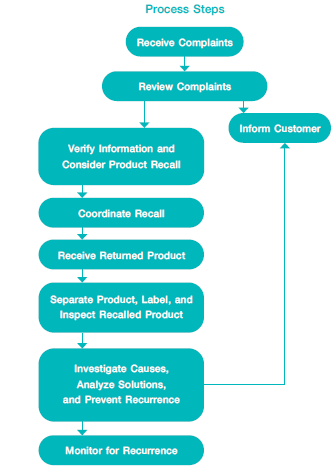
The Company is committed to developing products and services that are safe for customers and aligned with relevant quality standards, regulatory requirements, and consumer protection laws to ensure confidence in the quality and reliability of its products and services. The Company has obtained internationally recognized certifications, including ISO 9001:2015, a quality management system that ensures operational processes are effectively controlled, traceable, and supported by corrective and preventive actions to address potential issues.
In addition, the Company has established a Quality Policy to guide its operations with creativity and standardized processes while ensuring compliance with applicable laws and regulations. The policy aims to deliver products of excellent quality that are safe for consumers and environmentally responsible, while continuously improving products and services to meet customers’ needs and expectations.
The Company recognizes its role and responsibility in producing and disseminating media and content that are of high quality, accurate, transparent, and mindful of potential social impacts. The Company has therefore established policies and operational guidelines on quality and ethical standards in media and content production and distribution. These guidelines serve as a framework for employees and cover processes related to content design, review, and publication, the clear separation of commercial content from editorial content, as well as continuous oversight and improvement to ensure that the content presented is accurate, balanced, and socially responsible. In addition, the Company places strong emphasis on promoting access to high-quality media, enabling consumers to conveniently and safely access accurate, transparent, and socially beneficial information. The Company focuses on developing platforms and communication channels that are accessible across multiple devices, reducing technological barriers and expanding access for diverse consumer groups. At the same time, the Company ensures the accuracy and transparency of information through fact-checking processes and promotes diversity and non-discrimination in content presentation. The Company also prioritizes the protection of consumers from inappropriate content, particularly children and youth, while promoting media literacy to encourage responsible and critical media consumption among the public.
Promoting Media Literacy and Trusted Information
The Company implements the Promoting Media Literacy and Trusted Information initiative to support the public in accessing accurate, transparent, and socially beneficial information in the digital era. The initiative focuses on developing media platforms and communication channels that are user-friendly, compatible with multiple devices, and accessible to persons with disabilities and vulnerable groups. At the same time, the Company maintains strict oversight of content quality and ethical standards in media production and distribution.
The initiative also promotes media literacy, strengthening the public’s ability to critically evaluate information, distinguish reliable information from misinformation, and use media responsibly. This is achieved through the development of quality content, the creation of channels for public engagement and feedback, and the continuous development of media professionals’ capabilities.
Through these efforts, the Company aims to enable media consumers to access accurate information, reduce the spread of misinformation, and foster a culture of responsible media consumption that contributes positively to society in the long term.
In 2025, the Group reported no incidents related to customer personal data breaches or personal data leakage, and no significant complaints regarding violations of ethical standards in media production and distribution.
Community & Social — Plan & Guidelines
Has a Community & Social Plan
Yes
Plan Description
Responsibility to the Community and Society
The Company conducts its business alongside communities and society in a mutually supportive and sustainable manner, guided by the organization’s mission: “We work for the happiness and prosperity of society.” The Company strives to create shared value through beneficial and creative content and services that contribute positively to society, while continuously engaging in initiatives that support social and community development. These efforts form an important foundation for the Company’s long-term business growth.
The Company places strong emphasis on improving quality of life, strengthening communities, and promoting the well-being of society so that all stakeholders can grow together in a balanced and sustainable way. In its operations, the Company adheres to principles of good governance, business ethics, and social responsibility. It supports public benefit activities and collaborates with government agencies, private sector organizations, and civil society to undertake initiatives that benefit society and the environment.
In addition, the Company encourages executives and employees to actively participate in volunteer and community engagement activities on an ongoing basis. These initiatives aim to cultivate a sense of social responsibility, generosity, and participation in creating happiness, resilience, and prosperity for society as a whole.
In 2025, the Group organized 10 community and social initiatives, with a total contribution of THB 1,203,250, and recorded 18,000 employee volunteer hours.
Plan Areas
| Plan Area |
|---|
| Employment and professional skill development |
| Education |
| Religion and culture |
| Forests and natural resources |
| Sports and recreation |
| Occupational health, safety, health, and quality of life |
| Disadvantaged and vulnerable groups |
| Reducing inequality and promoting social equality |
Community & Social — Targets
Has Set Community & Social Targets
No
Community & Social — Performance & Outcomes
Has Performance Results
Yes
Performance Description
Operating Results for 2025: The Company conducts its business alongside communities and society in a mutually supportive and sustainable manner, guided by its corporate mission, “We work for the happiness and prosperity of society.” The Company is committed to creating shared value through content and services that are beneficial, creative, and contribute positively to society, while continuously participating in the development of communities and society. This approach serves as an important foundation for supporting the Company’s long-term business growth.
The Company places strong emphasis on enhancing quality of life, strengthening community resilience, and promoting the well-being of communities and society, enabling all sectors to grow together in a balanced and sustainable manner. The Company operates in accordance with the principles of good governance, business ethics, and social responsibility by supporting public benefit initiatives and fostering collaboration with government agencies, private sector organizations, and civil society partners whose activities contribute to social and environmental development. In addition, the Company encourages and supports executives and employees to participate in volunteer and social activities with communities on an ongoing basis, fostering a culture of sharing, social responsibility, and active participation in creating happiness, resilience, and prosperity for society as a whole.
In 2025, Amarin Group organized a total of 10 community and social initiatives, with total contributions amounting to THB 1,203,250, and recorded a total of 18,000 employee volunteer hours.
Community Engagement Activities
Amarin Corporations Participated in the Royal Kathan Ceremony at Wat Chaiyaphruekmalarajwaravihara
Amarin Corporations Public Company Limited was graciously granted the Royal Kathin robes by His Majesty the King for the year 2025. Mr. Sumeth Tantivejkul, Chairman of the Board, presided over the Royal Kathin offering ceremony at Wat Chaiyaphruekmalarajwaravihara, Taling Chan District, Bangkok. The ceremony was attended by members of the Board of Directors, advisors, executives, employees, distinguished guests from the public and private sectors, and members of the public.
This activity was organized to support and preserve Buddhism, uphold Thailand’s cultural traditions, and promote spiritual well-being in society. The total donation amounted to THB 1,576,324, which was used for temple maintenance, support for monks and novice monks, and the provision of four educational scholarships for local educational institutions, totaling THB 40,000, to support education and youth development.
This initiative reflects the Company’s commitment to conducting business alongside the preservation of Thai culture, the promotion of social values, and the strengthening of community well-being, in alignment with its mission to work for the happiness and prosperity of society.
Amarin Provided Assistance to People Affected by the Thai–Cambodian Border Situation
In 2025, due to unrest along the Thai–Cambodian border, Amarin TV launched the “Amarin Volunteer Express” initiative to help alleviate the hardships faced by affected communities. The Company leveraged its expertise and capabilities as a media organization to communicate information, raise public awareness, and encourage donations of essential items.
Donation collection points were established at Amarin TV’s headquarters, and the initiative was promoted through the Company’s media channels to facilitate public participation. Essential items donated included rice, dried food, diapers, sanitary products, mosquito repellent, and milk for children. These donated items were promptly delivered to affected border areas to provide relief and support to impacted communities.
Amarin Provided Assistance to Flood Victims in Southern Thailand
In 2025, in response to flooding in southern Thailand, Amarin Group, through Amarin TV, supported relief efforts by organizing donation drives and delivering essential supplies as part of its corporate volunteer initiatives.
Amarin TV served as a central hub for collecting donated items from the public, including dried food, drinking water, and essential supplies, which were subsequently delivered to the Royal Thai Navy to support relief operations and ensure timely and effective distribution to flood-affected communities. This initiative demonstrates the Company’s role in leveraging its media platform to connect public support with government agencies and enhance the efficiency of emergency response efforts.
These activities reflect Amarin’s role in responding to social crises by providing resources, communication support, and coordination with relevant stakeholders to alleviate hardship and provide encouragement to affected communities during times of urgent need.
Other Social Management
Plan & Outcomes — Description
The Company conducts its business alongside communities and society in a mutually supportive and sustainable manner, guided by its corporate mission, “We work for the happiness and prosperity of society.” The Company is committed to creating shared value through content and services that are beneficial, creative, and contribute positively to society, while continuously participating in the development of communities and society. This serves as an important foundation for supporting the Company’s long-term business growth.
The Company places strong emphasis on enhancing quality of life, strengthening community resilience, and promoting the well-being of society, enabling all sectors to grow together in a balanced and sustainable way. The Company operates in accordance with the principles of good governance, business ethics, and social responsibility by supporting public benefit initiatives and fostering collaboration with government agencies, private sector organizations, and civil society partners to drive positive social and environmental impacts.
In addition, the Company actively encourages and supports executives and employees to participate in volunteer and community engagement activities on an ongoing basis. These initiatives aim to cultivate a culture of social responsibility, contribution, and shared value creation, while strengthening communities and promoting long-term societal prosperity.
In 2025, Amarin Group organized a total of 10 community and social initiatives, contributing a total of THB 1,203,250 in support, and recording 18,000 employee volunteer hours.
Law Violation Incidents
Law Violation Incidents
| Metric | Current Year | Previous Year | Two Years Ago |
|---|---|---|---|
| The total number of cases or incidents of significant violations of laws or regulations regarding social and human rights (Cases) | 0 | 0 | 0 |
| The total number of cases or incidents that cause significant labor disputes (Cases) | 0 | 0 | 0 |
| The total number of cases or complaints related to consumer rights violations (Cases) | 0 | 0 | 0 |
| The total number of cases or complaints related to partner rights violations (Cases) | 0 | 0 | 0 |
| The total number of cases or incidents that cause disputes with the community/society (Cases) | 0 | 0 | 0 |
| The total number of cases or incidents related to cyber security or customer data breaches (Cases) | 0 | 0 | 0 |
| The total number of cases or incidents related to safety and occupational health at work (Cases) | 0 | 0 | 0 |